Local SEO for Lakes Region Businesses - How to Get Found
Want to show up when locals and tourists search for a business like yours? Here's the plain-English guide to getting found on Google.

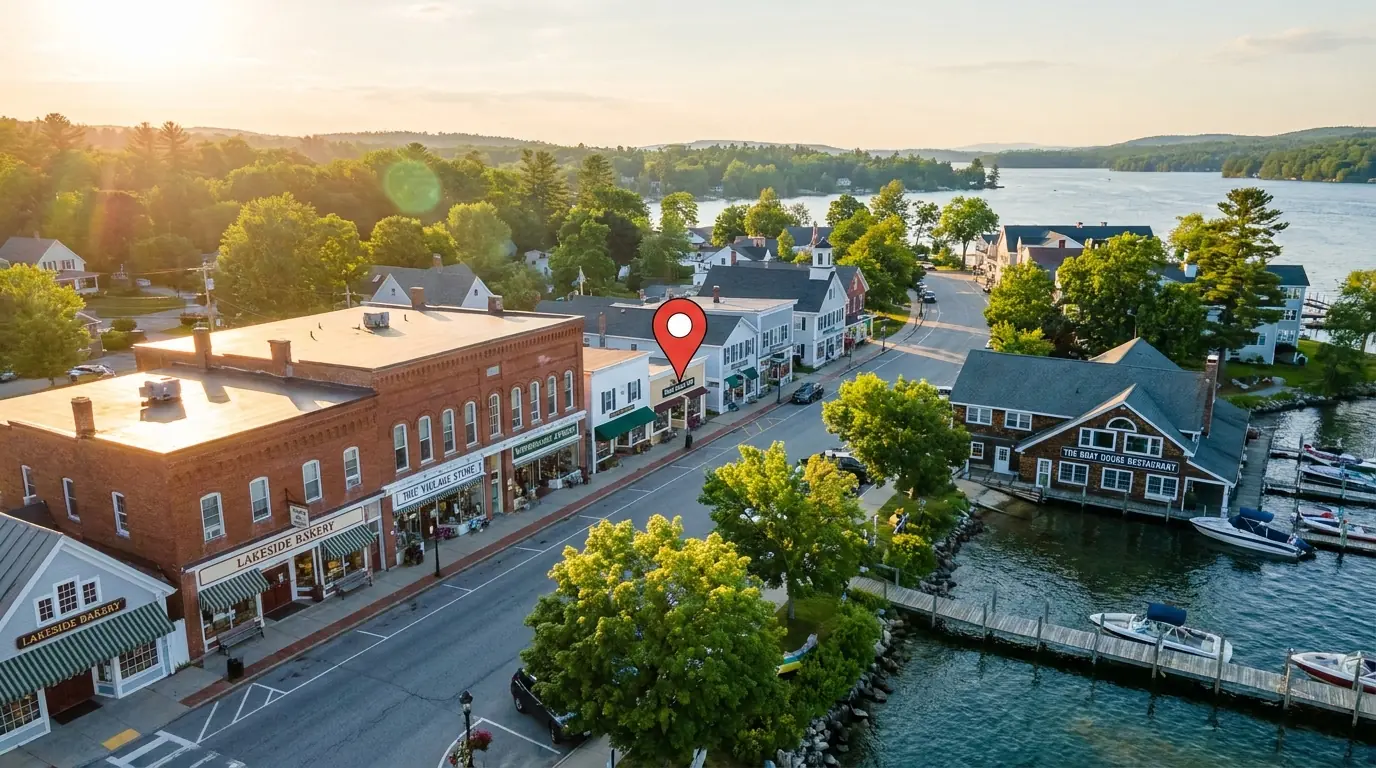
Local SEO for Lakes Region Businesses
Picture this: a family is driving up to Lake Winnipesaukee for the long weekend. Before they even hit the Tilton exits, they're on their phones searching "best pizza near Laconia" or "boat rentals Meredith NH."
Is your business showing up? Or are you handing that customer to your competitor down the road?
That's what local SEO is all about — and the good news is, it's not as complicated as it sounds. Let's walk through exactly what you can do to make sure people in the Lakes Region (and the tourists flooding in every summer) can actually find you.
What Even Is Local SEO?
SEO stands for Search Engine Optimization — basically, the art of showing up when someone Googles something. Local SEO is the more specific version: making sure you show up when someone searches for a business near them.
You know that little box that pops up on Google with a map and three business listings? That's called the Local 3-Pack, and it's prime real estate. Getting into that box is the goal. When someone types "web design Lakes Region NH" or "best breakfast Wolfeboro" — you want to be one of those three results.
Here's what goes into making that happen.
Step 1: Claim and Fill Out Your Google Business Profile (For Real This Time)
Your Google Business Profile (GBP) is the single most important piece of your local SEO puzzle. It's free. It's powerful. And a surprising number of local businesses either haven't claimed theirs or set it up halfway and forgot about it.
Go to google.com/business and claim your listing if you haven't already. Then fill out every single field:
- Business name — use your real business name, not a keyword-stuffed version
- Category — pick the most specific category that fits
- Address and service area — include the towns you serve (Laconia, Meredith, Gilford, Wolfeboro, Alton — whatever applies to you)
- Hours — keep these updated, especially when seasons change
- Phone number
- Website
- Photos — add real, current photos of your business, team, and work
The more complete your profile, the more Google trusts you. And the more Google trusts you, the more it shows you to people searching nearby.
Step 2: Get Your NAP Consistent Everywhere
NAP stands for Name, Address, Phone number. Google cross-references your business information across the web — your website, Yelp, Facebook, local directories, the Lakes Region Chamber of Commerce listing, wherever you show up.
If your address is listed as "123 Main St" on your website but "123 Main Street, Suite A" on Yelp, that inconsistency chips away at your credibility in Google's eyes.
Go through the main places your business is listed and make sure everything matches exactly. It sounds tedious, but it's one of the easier wins in local SEO.
Key directories to check:
- Google Business Profile
- Facebook / Instagram
- Yelp
- Lakes Region Chamber of Commerce
- Apple Maps
- Bing Places
- TripAdvisor (especially for tourism businesses)
Step 3: Use Local Keywords on Your Website
Your website needs to actually say where you are. This sounds obvious, but a lot of small business websites are so focused on what they do that they forget to mention where they do it.
Work these kinds of phrases naturally into your pages:
- "Serving businesses in Laconia, Meredith, and the Lakes Region of New Hampshire"
- "Web design for Lakes Region NH small businesses"
- "Located in the heart of the Lakes Region"
You don't need to stuff keywords in awkwardly — just make sure your location is genuinely present in your page titles, headings, and content. If Google can't tell where you are, it won't show you to people searching nearby.
Also: make sure your footer has your full address on every page. Simple, but effective.
Step 4: Get More Reviews (This Is the Big One)
Here's something that might surprise you — online reviews are one of the biggest factors in local search rankings. Google wants to show people businesses that other people have vouched for.
More reviews = more trust = better rankings. It's that straightforward.
The hard part isn't knowing that — it's actually asking for them. Most happy customers don't leave reviews unless you remind them. So start reminding them.
A few easy ways to do it:
- Send a follow-up email after a job is complete with a direct link to your Google review page
- Add a "Leave us a review" link in your email signature
- Put a small sign at your register or checkout: "Love us? Tell Google!"
- Just ask — personally, in the moment — when a customer says something nice
And when reviews come in, respond to them. All of them — the good ones and the not-so-great ones. It shows you're engaged, and Google notices.
Step 5: Build Local Links
Links from other websites pointing to yours are a big deal for SEO in general — and local links carry extra weight for local SEO.
What counts as a local link? Things like:
- A listing in the Lakes Region Chamber of Commerce directory
- Getting mentioned in a local news story or the Laconia Daily Sun
- A guest post or feature on a local blog
- Sponsoring a local event and getting a link from their website
- Partnering with complementary businesses (a marina linking to your restaurant, for example)
You don't need hundreds of links. A handful of quality local links can make a meaningful difference.
Step 6: Make Sure Your Website Is Actually Good
All the local SEO work in the world won't help you if someone clicks through to your site and it's slow, hard to read on a phone, or looks like it was built in 2009.
A few things that directly affect local rankings and conversions:
- Mobile speed — most local searches happen on phones. If your site takes more than 3 seconds to load, people leave.
- Clear contact info — your phone number should be visible and tappable on mobile
- Easy navigation — if people can't find your hours, location, or services in about 5 seconds, they're gone
- SSL certificate — your site URL should start with
https://, nothttp://. If it doesn't, Google flags you as "not secure."
These aren't glamorous fixes, but they're foundational. A fast, mobile-friendly site is the floor, not the ceiling.
The Lakes Region Advantage
Here's the thing about marketing in the Lakes Region — you're not competing against every business in the country. You're competing against the handful of similar businesses within 20 miles.
That means the bar to stand out is genuinely achievable. A lot of local businesses are still running on outdated sites with incomplete Google profiles and zero reviews. If you do the basics well, you'll be ahead of most of your competition.
And when summer hits and tourists are searching for exactly what you offer — from the car, on the lake, at the campsite — you'll be the one they find.
Where to Start
If this all feels like a lot, just pick one thing:
- Claim and complete your Google Business Profile
- Check your NAP consistency across the web
- Ask your next 5 happy customers to leave a review
Do those three things and you'll already be further along than most Lakes Region businesses. The rest can follow.
Need help getting your website and local SEO dialed in? At Granite Cloud & Code, we work with Lakes Region businesses to build fast, locally-optimized websites that actually bring in customers. Let's talk.
Comments
Sign in to leave a comment.
