What Is Laravel, and Why I Build With It
Laravel is the framework behind the custom web apps I build. What it is, why I chose it, and what it means if your business runs on one.

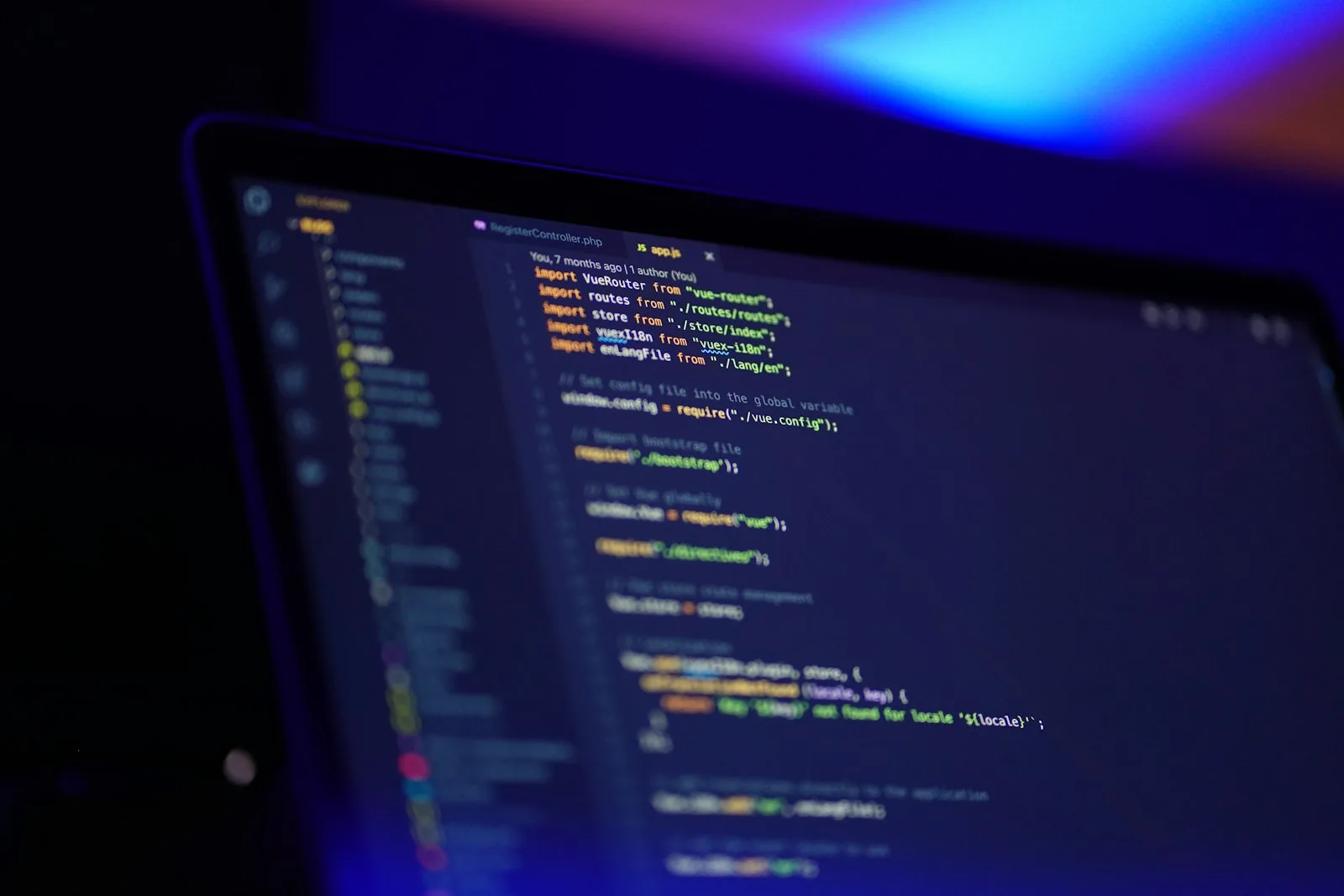
If you've talked to me about a customer portal, an online booking system, or anything more involved than a basic website, you've probably heard me mention Laravel. It's the framework behind most of the custom web applications I build and maintain.
Most business owners don't need to know how it works under the hood, any more than you need to know how your truck's transmission works. But if your business runs on a Laravel app, or you're thinking about having one built, it's worth knowing what it is and why it matters for you.
The short version: Laravel is a free, open-source toolkit for building web applications in PHP. It handles the parts every app needs (logins, databases, email, security, payments) in a proven, well-tested way, so your budget goes into the parts that are unique to your business instead of reinventing the basics.
What Laravel Actually Is
Every web application, whether it's a scheduling system for a plumbing company or a members' area for a marina, needs the same foundation:
A way for people to log in securely and reset their password
A database to store customers, orders, appointments, and everything else
Email and notifications
Protection against common attacks
Background jobs, like sending a reminder the day before an appointment
Payments, more often than not
You could write all of that from scratch for every project. Some developers do. It takes a long time, it costs the client a lot, and every hand-built piece is one more place for a bug or a security hole to hide.
Laravel gives developers all of that foundation, already built and battle-tested. It's a framework: a structure and a set of tools that a web application is built on top of.
Think of it like building a timber-frame house. You wouldn't mill your own lumber and forge your own nails for every job. You'd start with quality materials and proven joinery, then spend your time on what makes the house yours: the layout, the finishes, the view.
Laravel was created by Taylor Otwell and first released in 2011. Today it's the most popular PHP framework in the world, used by everyone from solo developers to large companies, and it's backed by a full-time company dedicated to maintaining it.
Why I Build With It
I've worked with a lot of tools over the years. Laravel is the one I keep coming back to for custom work, for a few reasons.
There was a time, almost a decade ago, when I started building a web app from scratch. The amount of time it took to simply hook my website into a database took days. When I discovered the Laravel framework, it was something that was included in the scaffolding of a new app. On top of the amazing community behind it, I knew this was something I would enjoy building with.
It comes with almost everything
Logins, user roles, email, file uploads, scheduled tasks, background jobs, caching, and testing tools are all included or available as official add-ons. When a client needs subscription billing, Laravel has an official Stripe integration. When they need a real-time dashboard, there's a tool for that too.
That means less time gluing together random third-party pieces from unknown authors, and more time building what the client actually asked for.
I trust it with my own business
Granite Cloud & Code itself runs on Laravel. The site you're reading, the client dashboard my customers log in to, and the Stripe payments built into it are all Laravel. I'm not recommending something I wouldn't build my own company on.
The code is clean and readable
Laravel has strong opinions about how an application should be organized. That sounds like a developer detail, but it has a real payoff: any experienced Laravel developer can open a Laravel project and find their way around quickly. That matters to you, as you'll see below.
Security is built in, not bolted on
Out of the box, Laravel protects against the most common web attacks:
SQL injection, where an attacker sneaks commands into your database through a form
Cross-site scripting (XSS), where malicious code gets injected into your pages
Cross-site request forgery (CSRF), where another site tricks a logged-in user into taking an action they didn't intend
Password storage, using strong, industry-standard hashing so passwords are never stored in plain text
A developer has to go out of their way to turn those protections off. On a hand-rolled app, someone has to remember to add every one of them.
Predictable releases and long-term support
Laravel ships one major version a year, and each one gets bug fixes for 18 months and security fixes for two years. I know what's coming, and I can plan upgrades on a schedule instead of scrambling.
A huge community
Because so many people use Laravel, almost every problem has already been solved, documented, and discussed. There are official packages for common needs, thorough documentation, and a deep pool of experienced developers.
What It Means for You, the Client
Here's where the developer stuff pays off for the business that owns the app.
Your budget goes further
Because the foundation is already built, I don't bill you to reinvent logins and password resets. The hours go into the features that make your app worth having: your quoting logic, your booking rules, your customer portal. You get more app for the same investment.
You're not locked in to one developer
This one matters more than most people realize. A lot of custom software is a black box that only the person who wrote it can understand. If that developer disappears, retires, or gets too busy, the business is stuck.
A Laravel app follows conventions that thousands of developers already know. I'd love to be your developer for the long haul, but you should never be trapped with anyone, including me. Building on Laravel means you're not.
Your app is safer by default
Between the built-in protections above and a framework that gets regular security updates, a Laravel app starts from a much stronger position than one built from scratch.
And when something does come up, it gets handled. When the PHP2Shell vulnerability hit PHP this month, every Laravel application I maintain, including my own, was patched the same day the fix was released.
It can grow with your business
Many of my Laravel projects start small: a simple portal or an internal tool. Laravel is built to handle much bigger things, so as your business grows, the app can grow with it. Adding features later doesn't mean starting over.
It stays maintainable for years
Laravel's predictable release schedule means upgrades are planned and manageable. I keep the apps I maintain on supported versions, so you're not sitting on outdated software that stopped getting security fixes years ago.
See It in Action
Want to see what this looks like in practice? I built Ledgewater Studio, a demo website for a fictional wedding and portrait photographer in Meredith, NH.
On the surface it's a beautiful portfolio site. Underneath, it's a Laravel application doing real work for the business:
Bookings with deposits, so a client can check availability and hold their date
Private client galleries, where clients log in to favorite, download, and share their photos
Proofing, so clients can pick their favorites before final edits
A print shop with a cart, so a gallery can turn into print sales
A journal the photographer can update themselves
Those are exactly the features that are painful to stitch together from plugins, and straightforward to build on Laravel. Go ahead and click around. It's a demo, so no real payments are taken.
When Laravel Isn't the Right Fit
I'd rather tell you this up front: Laravel isn't the answer for every website.
If you need a straightforward site to tell people who you are, show your work, and get the phone ringing, a full custom application is usually more than you need. A well-built custom website or a WordPress site is often the better, more affordable choice.
Laravel shines when your website starts acting more like software: customer accounts, bookings, quotes, invoices, inventory, dashboards, or anything with real business rules behind it. If your "website" has turned into a stack of spreadsheets, emails, and workarounds, that's usually a sign.
The Bottom Line
Laravel is the foundation under the custom web apps I build. For me as a developer, it means less time on plumbing and more time on the problems you actually hired me to solve. For you, it means a lower build cost, an app that's secure by default, and software that any qualified developer can pick up and maintain for years to come.
If you've got an idea for a portal, a booking system, or a tool that would take work off your plate, I'd love to hear about it.
Comments
Sign in to leave a comment.